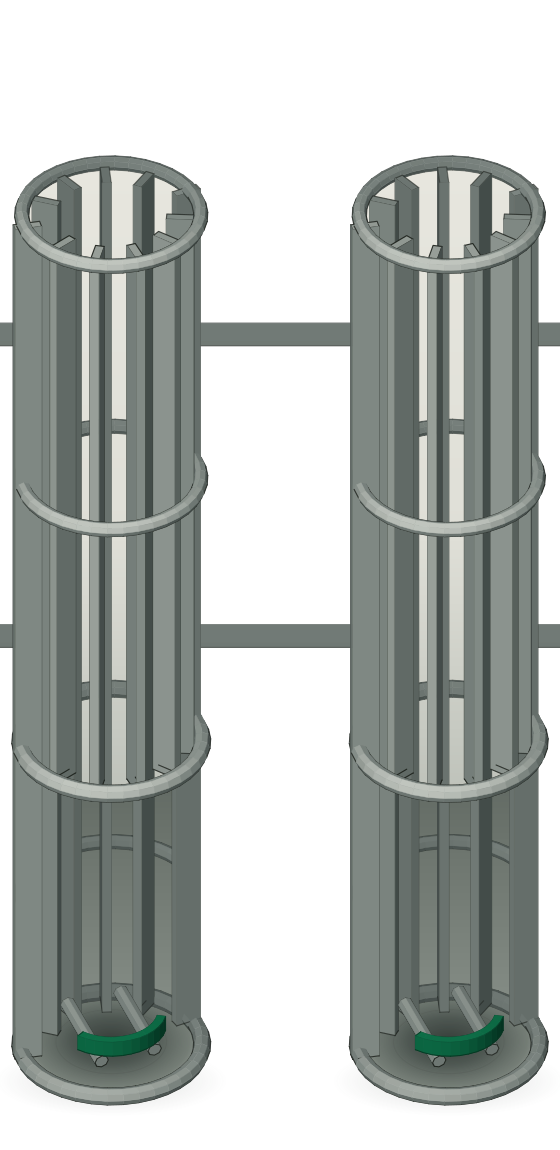
01

Drop
You finish your drink at the corner. Instead of throwing it in the basket, you drop it into the mouth of a tube.
The Deposit Rack is a tube that straps to a city litter basket. You drop your can on the top and someone who needs it takes it from the bottom.
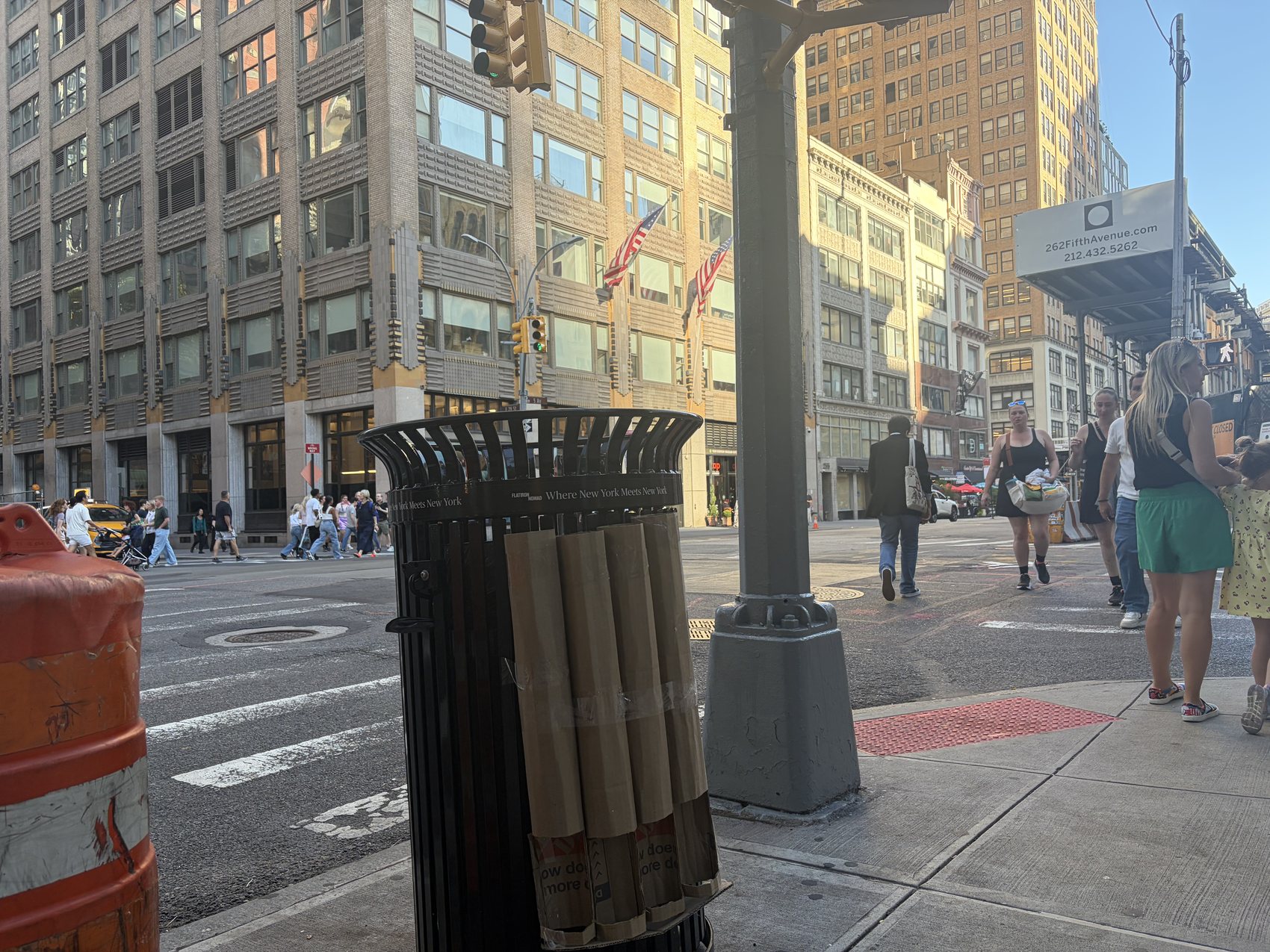 Pl. 01 · V1 installed, Manhattan, August 2026
01 The problem
Every day in New York, people called canners walk the NYC block and collect bottles and cans for the deposit refund. Most of that work happens at the litter basket on the corner, where the containers sit under the coffee cups and somebody's takeout leftovers.
There is a bin on almost every corner already. There is nowhere to set a can down so the next person can take it without reaching in.
Germany built an answer to this through the Pfandring, a steel ring bolted to a public bin so bottles can be set down instead of thrown away.
The Deposit Rack is New York's first answer to this.
02 The object
A cage of eleven steel ribs with four hoops around them, hot-dip galvanised. Two of them band to the outside of a standard city basket. You load it from the top and take from the bottom.
Rev E · September 2026 · supersedes the four-tube v10 shown in the field-test photographs below
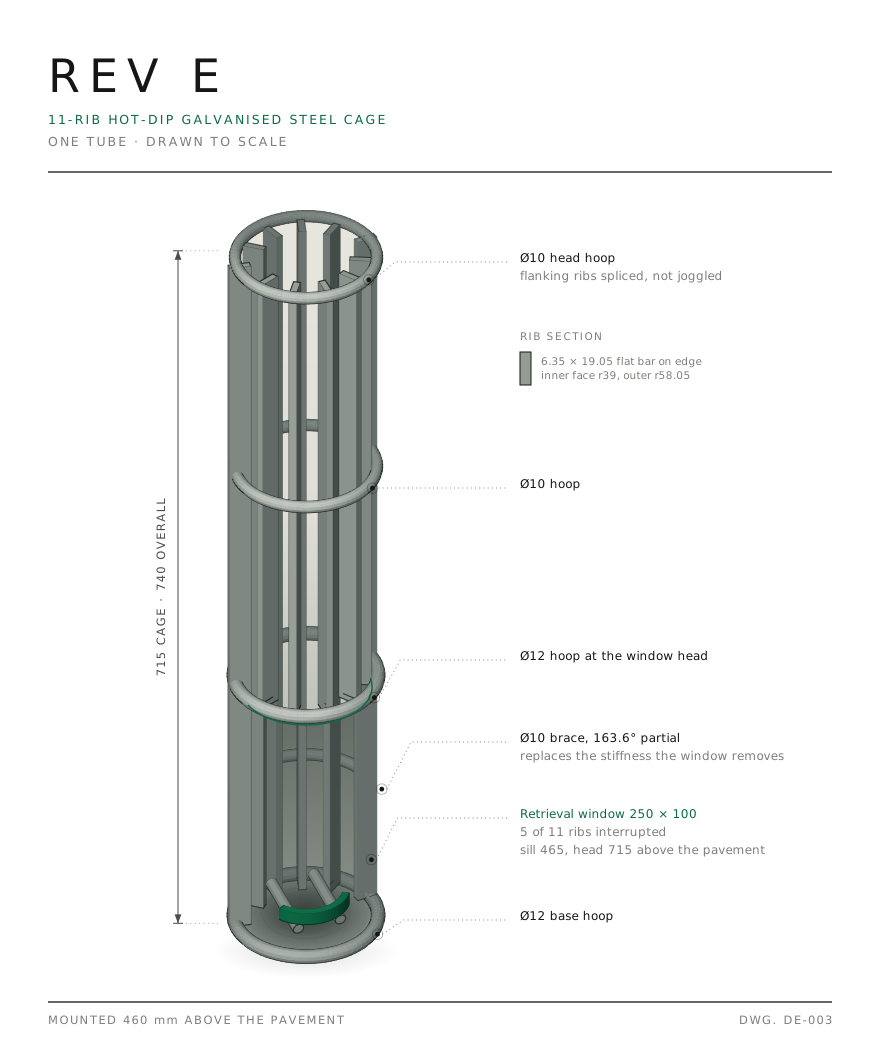
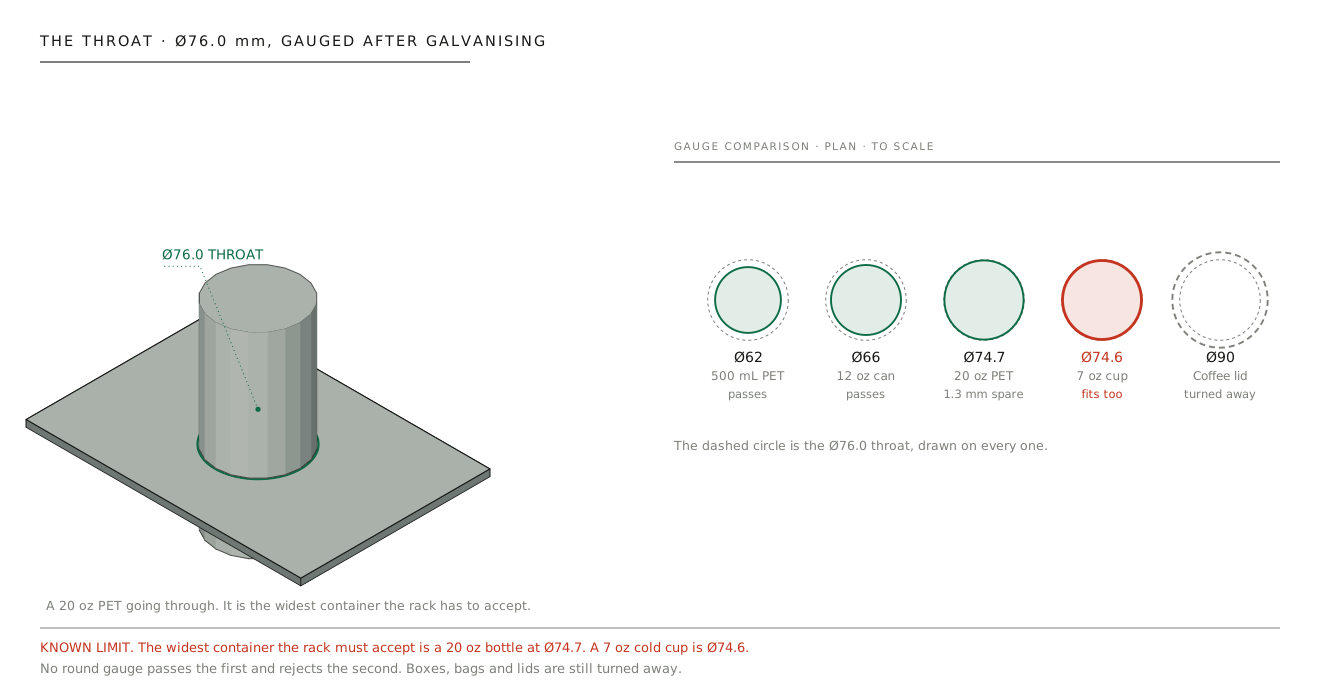
The throat is a Ø76.0 mm ring, gauged after the zinc goes on. Cans and bottles fit through it. Pizza boxes, bags and coffee lids do not. A 7 oz cold cup measures Ø74.6 mm and a 20 oz bottle measures Ø74.7 mm, so any opening that lets the bottle through lets the cup through as well. We have not solved that one.
Stainless bands wrap the existing bin. Nothing is drilled, welded or bolted into city property. A pilot can be approved with written permission instead of a two-year purchase.
Aluminium would be lighter, which would help the mount. Two things ruled it out. Welding anneals the alloy and this cage has 62 welds, so the ribs would yield at 55 MPa where they need 134. And 6063 melts at 615 °C, while a fire in a litter basket can reach 1,000. Galvanised steel is fine on both counts.
03 How it works
You finish your drink at the corner. Instead of throwing it in the basket, you drop it into the mouth of a tube.

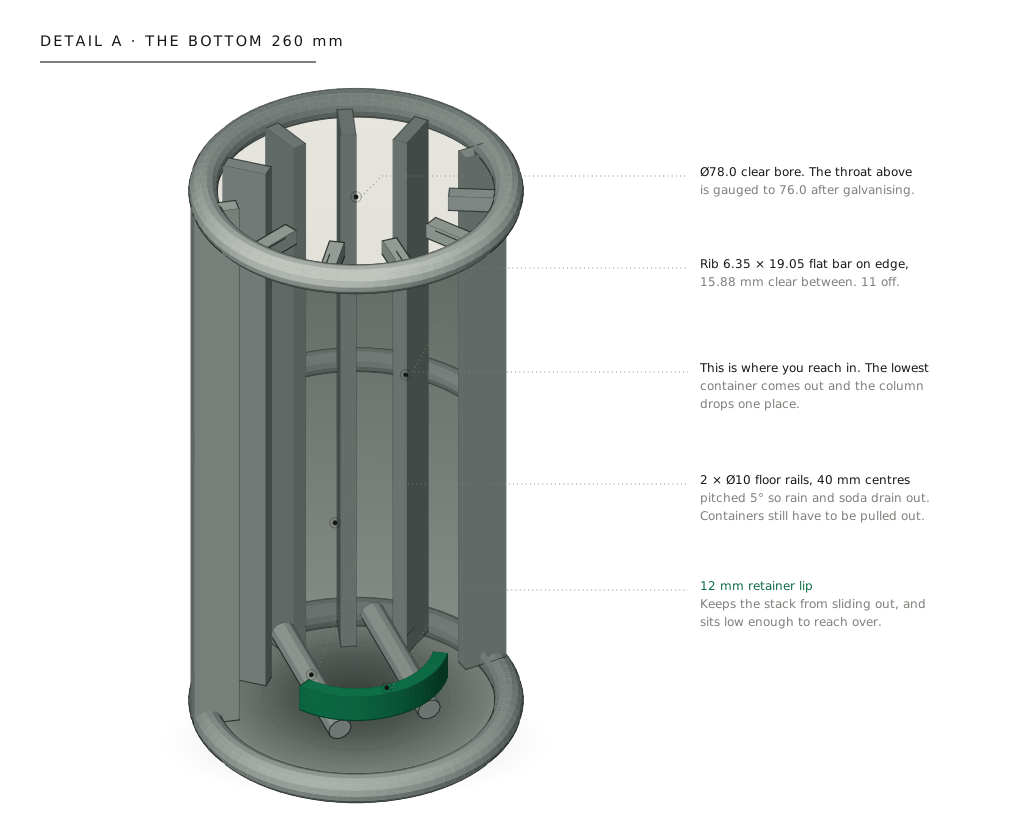
The can falls the length of the cage and lands on two sloped rails. The next one stacks on top of it. A tube holds four containers before the top one gets too high to reach comfortably.

A canner reaches into the window at the bottom, takes the lowest can, and the column drops one place.
04 Field test


05 Why now
The Bigger Better Bottle Bill would expand New York's deposit system. It would cover far more of what people actually drink and double what each container returns. If it passes, the number of containers worth collecting goes up sharply. But every one of them still has to come out of a trash can by hand.
Drop Empties is not waiting for that. The Deposit Rack works with the deposit we have now, and it would work better if the deposit goes up.
06 What's next
Sixteen tubes in hot-dip galvanised steel, built as eight two-tube Duos. That is the same metal and the same number of containers as four four-tube Quads, but it covers eight baskets instead of four.
Place them on a single block with a willing partner, like a BID, a bodega or a community board. All eight sit on the same walking route, so a canner can check them in one pass.
A tube holds four containers at a time. Nobody has counted how many times a day one would fill up, and that number decides whether it is worth a canner walking over to it. We are going to count that on the street before anything gets built.
The math also says one or two tubes per basket, not four. Four tubes on one side will tip an empty basket over. So the pilot uses Duos.
And we have not shown this to any canners yet. That comes first.
07 Who's building it

I am a high school student in New York who became interested in canners after seeing how much work goes into something most people walk past. I started noticing canners on my own block, digging through trash and sorting cans in the heat.
As an Asian American, I have also seen people from my own community doing this work, often without much recognition. The more I noticed them, the more I wanted to understand their lives and the system around them. My goal for building the Deposit Rack is to make canning a little safer, easier, and more respected.
08 Contact
If you have a block that could host these, or you collect containers and would tell me what I have got wrong, I want to hear from you.